What I discovered the first time I sat at one of fashion's tables.Sit with me for a moment and pick your favourite wine.
When I bought my ticket to Melbourne Fashion Week, I hesitated. Would there be a place for me? Was there an invisible code of belonging? Would I fit in? And if I went alone, would my nerves get the better of me until all I wanted was to leave?
This wasn't a small worry. In fashion, access to the most celebrated shows usually depends on invitations, industry accreditation and relationships with fashion houses.
In Melbourne, I found a different way in.
Picture it with me: a long table, set with details that hint at luxury and creativity. It looks expensive, and there seem to be very few seats. That, in essence, is a runway: a long stretch where each house serves up its best, with guests seated on either side.
The one I found in Melbourne was enormous. Not because every seat was equal, but because there were different ways to get one: gold and silver tickets, bookable wheelchair spaces, and a room shared by industry insiders and by people who, like me, were there for the first time.
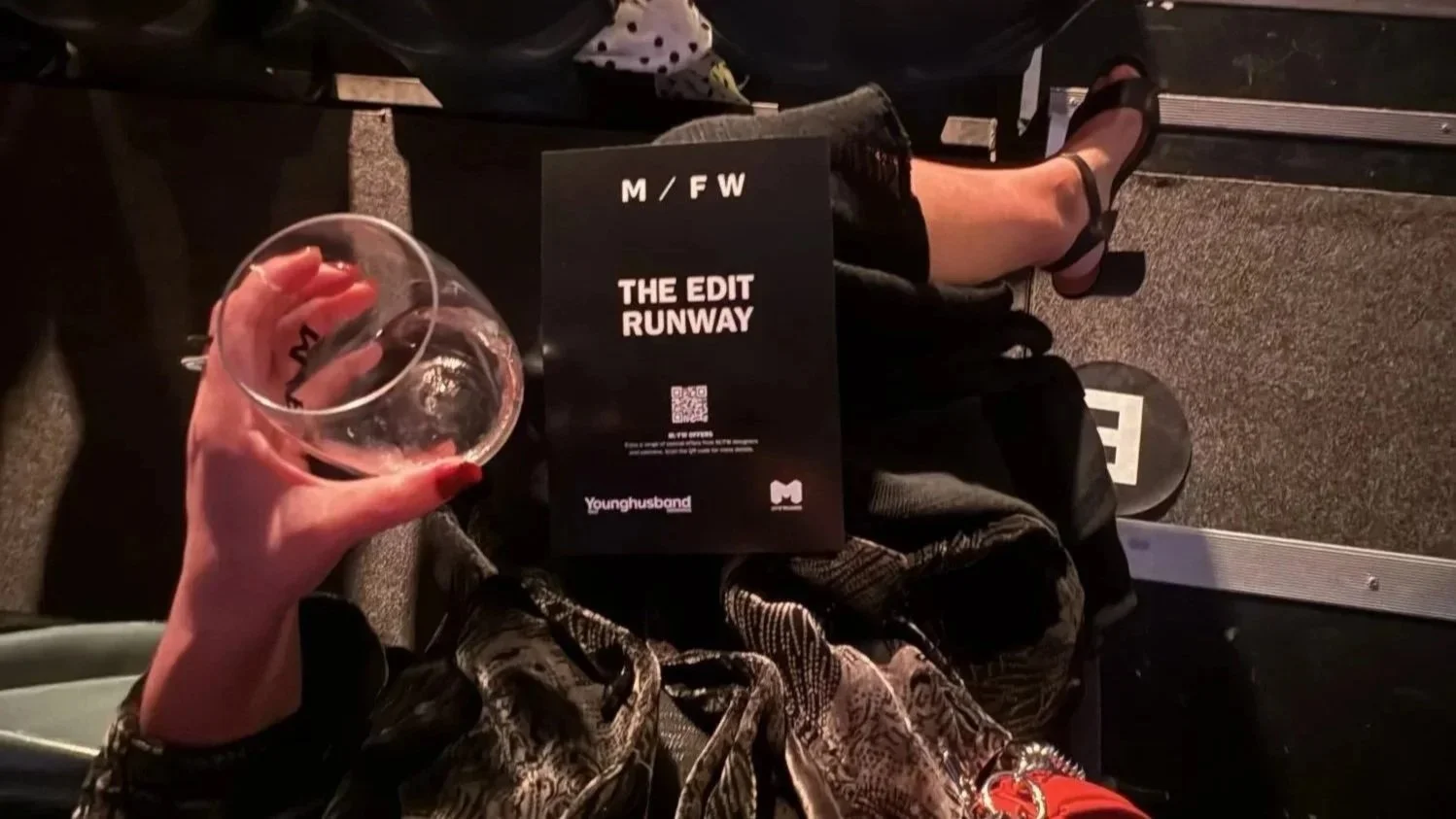
Row E, seat 92
My night was Thursday 22 October: The Edit Runway at Younghusband, a former wool store in Kensington that's now a creative precinct.
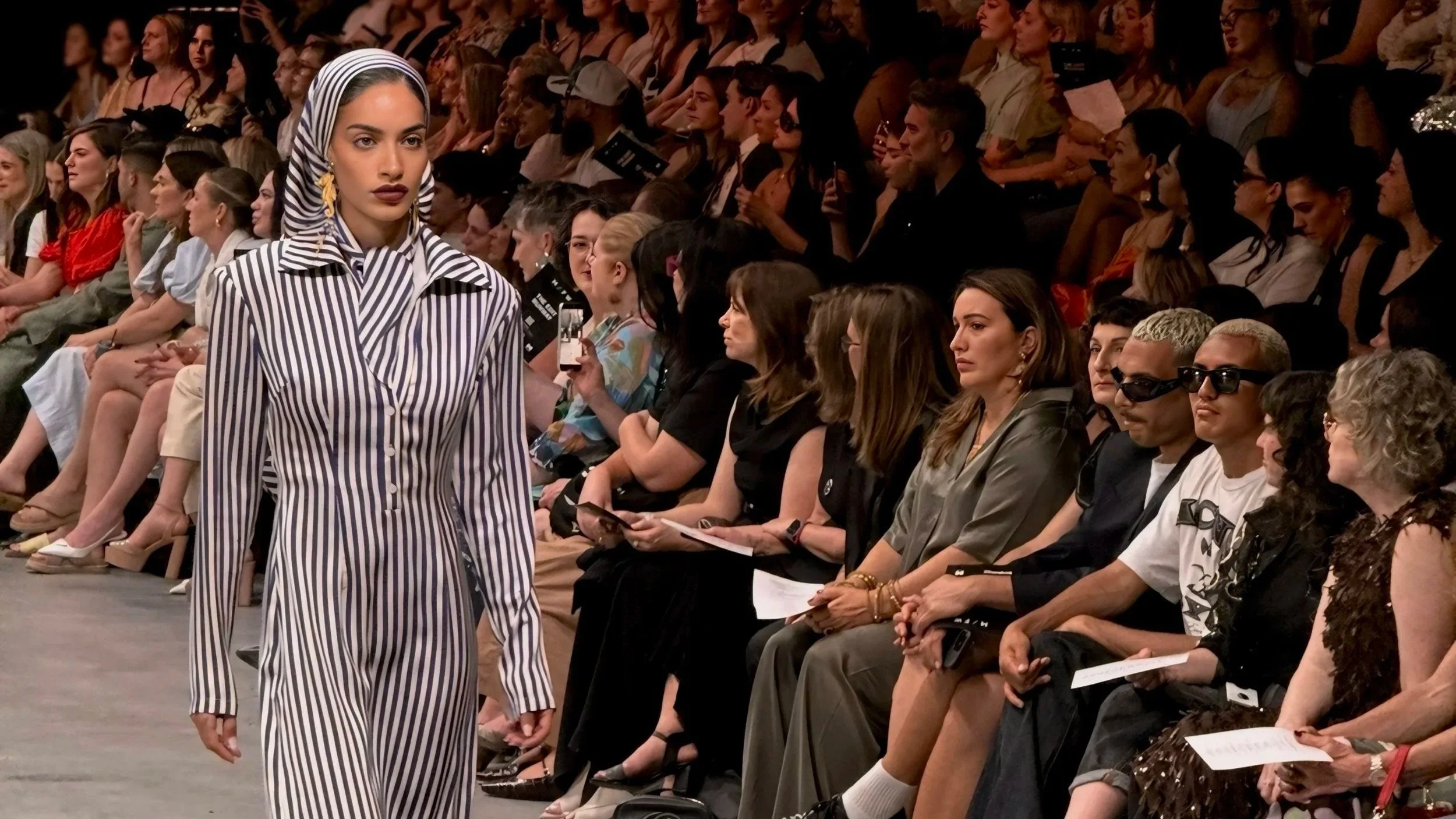
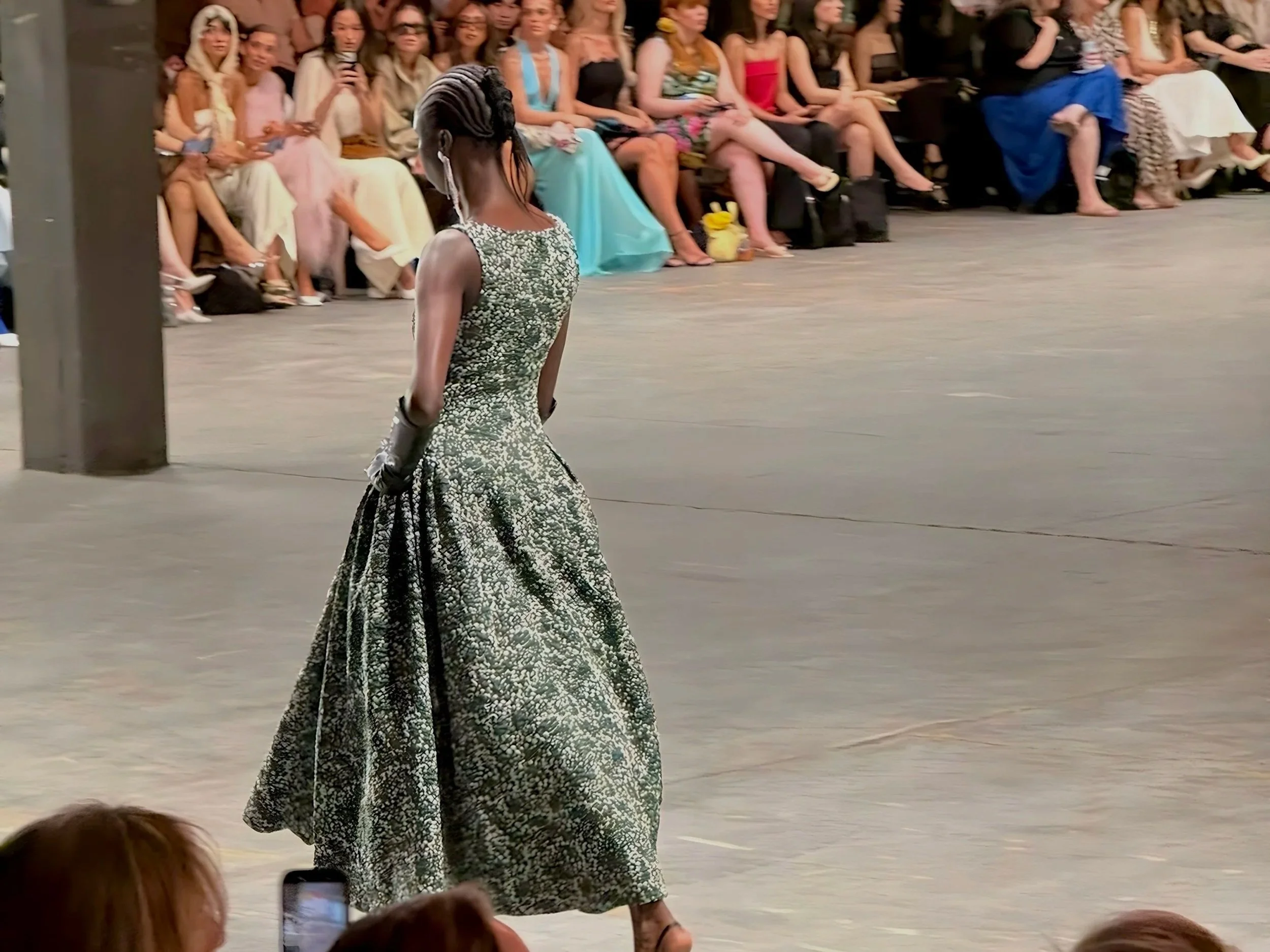
For half an hour, Asiyam, Atoir, Bianca Spender, CLEA, EDITION x Sarrita King, ELIYA THE LABEL, Elka Collective, NGALI, Oroton and Third Form took to the runway, styled by Stuart Walford and set to a live performance by artist Sui Zhen: a celebration of modern femininity in all its forms.
Then came one of the night's most special moments: Vivienne Westwood bridal gowns, presented by Melbourne bridal house Raffaele Ciuca. International bridal design sharing a runway with Australian labels, including First Nations designers, while I watched from a silver seat.
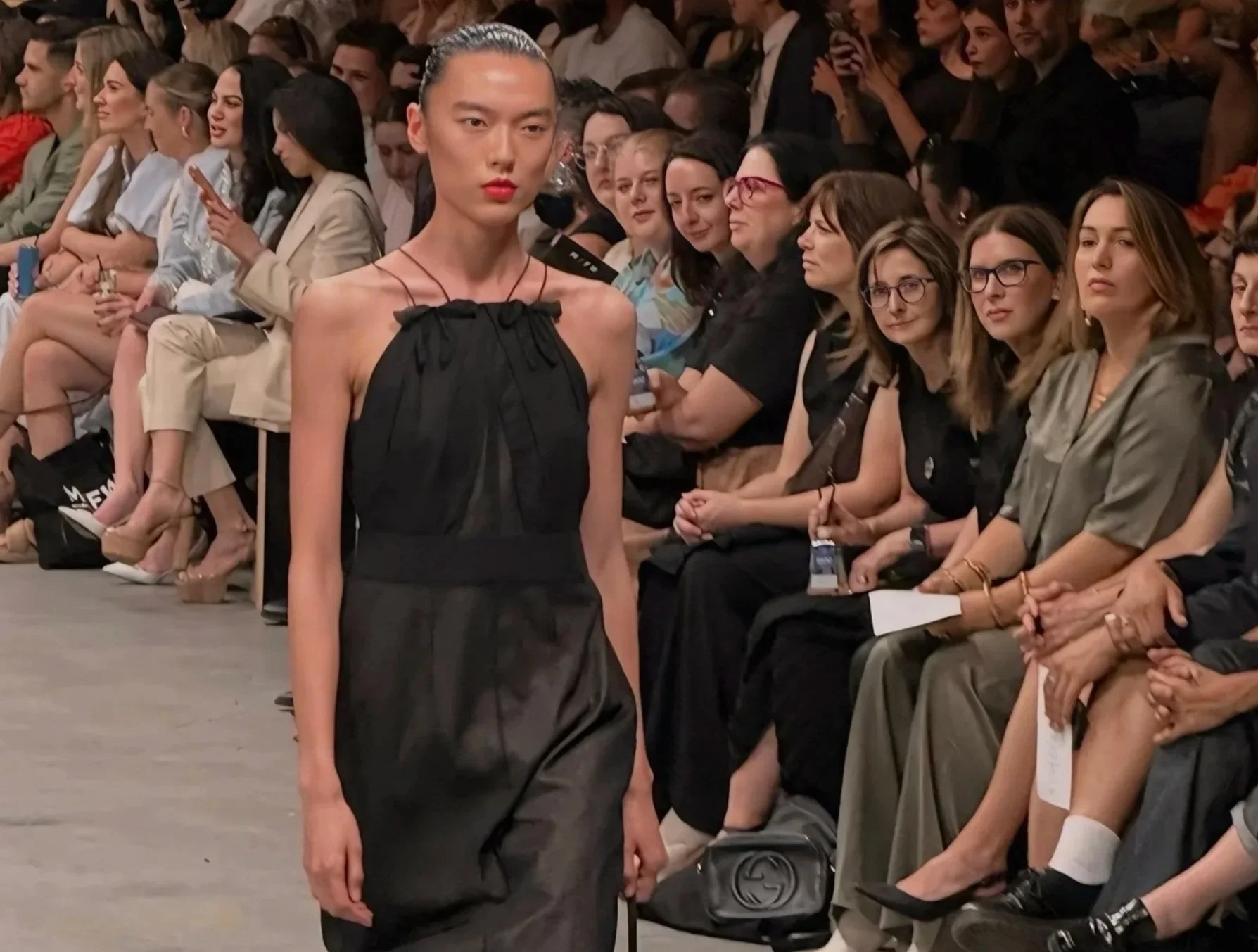
Everything was new to me. Watching a runway live, with the colours, textures and shapes of each design moving as the soundtrack played, showed me something a screen can't: the painstaking work behind every piece, and a whole room admiring the many ways an aesthetic can be brought to life.
Of course, there were influential people. In the audience sat Charlene Davies, the Melbourne artist, model and fashion influencer with more than a million Instagram followers. And yes, some people clearly already belonged to that circle. But even as an outsider, I felt there was room for every kind of style: daring outfits and simpler ones, different cultures, different ways of reading fashion.
The diversity wasn't only on the runway; it was in the crowd, too.
As the night went on, the question shifted. It was no longer whether I could feel comfortable there, but something else: what happens when a fashion event opens its doors to people who usually watch from the outside?
The answer lay, in part, in the details.
The price of a seat
Tickets to this year's premium shows ranged from roughly AU$59 to AU$299; mine, a silver ticket, cost AU$82.57. Some tickets came with perks like gift bags, and front-row seats cost more.
Some shows even moved onto the street: on 24 October, anyone walking through City Square could stop and watch for free.
That matters. But opening a door is not the same as removing every barrier.
Democratising fashion doesn't mean everyone gets the same opportunities. It means widening who gets to take part in a conversation that, for a long time, was largely reserved for those already inside it.
An affordable ticket can get you into a show. On its own, it won't build your professional network or get your work recognised.
Openness is a beginning, and a very good one. But it isn't the whole solution.
Other tables
To put what I saw in perspective, it helps to look at other cities.
In Paris, shows and presentations on the official calendar are invitation-only. That doesn't mean the city shuts fashion away: there are public events, exhibitions and independent shows too.
Milan works in a similar way. Official shows are invitation-only, although Diesel's 2022 runway showed that a brand can open its show to a much wider audience. In London, where many shows are also for invited guests, professional presentations sit alongside public events and digital platforms that take the collections far beyond the front row.
These aren't identical models, and it wouldn't be fair to judge a whole city's openness by a single show. What's interesting is how each one creates different ways in.
In Melbourne, I found several of those doors open at once. This year alone brought more than 100 free and paid events, more than 300 designers and retailers, and seven premium shows, alongside public spaces, student showcases and a strong presence of First Nations designers. That doesn't mean hierarchies have disappeared. It does mean there are ways to take part without first needing an invitation from the industry.
Who picks up the bill?
But every table comes with a bill, and before we celebrate the openness, it's worth checking it. Exclusivity isn't only a barrier. For luxury houses, scarcity is part of what makes a garment valuable; designer Haider Ackermann has put it plainly: true luxury shouldn't be universally accessible. And runway shows began as working tools for press and buyers, the people who get a collection sold and keep the workrooms going. Closing the door can also be a way of looking after what's inside.
So who covers the cost of opening it? In Melbourne, the week is run by the City of Melbourne, which has put millions of dollars of public money into past editions, and the council estimates the event added around AU$32 million to the local economy in 2025. My AU$82.57 ticket didn't pay for that table; ratepayers and sponsors did, at least in part. Meanwhile, an independent designer putting on their own show in London can need upwards of £50,000.
This is where I'm left with questions I can't answer, so I'll leave them on the table for you. Is exclusivity only a barrier, or is it also a form of care? Does an affordable ticket democratise fashion, or does it just sell fashion to more people? If those of us in the seats can't afford what walks past us, is the show still a chance for designers to sell and find work, or does it become a shop window?
Perhaps the answer changes depending on who sits down, what's served, and who leaves the table with more than the memory of a good night.
More doors
Democratising fashion isn't only about giving more people a seat in the audience. It's also about giving opportunities to those who want to create, show their work and find their place in the industry.
Watching students lead their own runway, with a real audience in front of their designs, isn't just a modern gesture. It gives the next generation a say in which wine is poured at that professional table. And that, to a large extent, is what democratisation looks like: opening up stages that have long favoured people with an established track record, experience and recognition.
It also means giving First Nations designers visibility and recognition in an industry where they have historically had to fight for their place. This year, the week opened with ganbu marra, the runway dedicated to First Nations talent.
And it isn't only about representation. It's about recognising that these stories, knowledge and ways of making belong at the centre of Australian fashion's story, not on its margins.
There's one last door that matters to me in particular: the freedom to express yourself through clothing without conforming to a single idea of luxury.
Throughout the week, I also saw room for pre-loved fashion, and for pieces that didn't need to be new, expensive or from a big-name label to be part of the conversation.
The stars of my outfit were second-hand pieces, chosen for their style and their sustainability. Among so many looks, they held their own, and even drew a few admiring glances.
I don't believe an open runway automatically makes the industry sustainable, or that wearing second-hand will single-handedly solve its environmental problems. But I do believe that widening the ways people take part lets us question the idea that a garment's value comes from its price, its exclusivity or its label.
Sustainability needs room for that conversation too: about what we buy, what we keep, what we reuse, and the stories we choose to wear.
The toast
But what stayed with me most came afterwards, once the table had been cleared. As we left, some people drove home; others, like me, walked to the train station. There on the platform, several of us waited: some still in their evening wear, and among them, one of the models who had walked the runway just minutes earlier. For a moment, the industry I'd always seen as so distant was right there, waiting for the same train. I don't know if that's democratisation; maybe it's just ordinary life. But it reminded me that fashion doesn't always live apart from the rest of us.
Maybe democratisation isn't about erasing the differences between the seats, but about more ways to sit down, more voices joining in and more stories worth hearing.
So if I had to propose a toast, it would be to fashion that keeps opening its doors, questions its own barriers and engages more with sustainability. To an industry that doesn't confuse exclusivity with value, or access with equality.
I raise my glass. And if you feel like joining me next year, there's room.
Cheers!